 2 Maccabees 7:1-2, 9
Hebrews 11:1-2, 35, 39-12:1-2
Luke 15:1-7
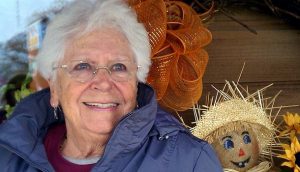
Jackie was an enigma to me. I don’t mean as a friend but as a pastor. We met a few years ago, and the specifics of our first meeting are now forgotten memories to me.
Jackie was a neighbor and our paths often crossed. We waved to each other in the morning when she walked her dog, Bubba. Sometimes, we talked. Jackie and Sheri, my wife, became closer friends. They visited and, at times, I became part of their conversation when I came home for lunch.
A few years ago, Jackie asked us if we would be her voice to turn off life support if needed. We agreed. So, she gave us a durable medical power of attorney, sanctioning us for such a life-or-death decision. We never had to, for a police officer called our house Friday morning, June 24, telling us Jackie had died. Such trust she placed into our hands, even if only needed because her children lived outside the US.
A couple of years ago, we took Jackie to a hole-in-the-wall restaurant in Lo Gap, Arkansas. If you ate a meal with Jackie, you experienced her speaking her mind, which she did to the servers. A part of me wanted to hide, for Jackie didn’t mince words, saying if something didn’t meet her expectations.
Such was Jackie. So, why as a pastor did I find Jackie to be an enigma? She grew up as a Lutheran. Did Jackie ever tell you? She grew up in Wisconsin, went to a Wisconsin-Synod church, was baptized and confirmed. When we met, she went to St. Andrew Presbyterian Church, here in town.
Being a plain-spoken person, Jackie shared her religious thoughts with me, which wavered everywhere. One time, she would consider herself an atheist, thinking all religion was a bunch of nonsense.
Other times, Jackie would trust in Jesus. She had faith in Jesus but also doubted. Everyone with a sinful nature is that way, for our sinful nature never wants to believe in Christ. Other times, Jackie would become incensed when the Church’s progress did not move according to her understanding.
A couple of years ago, St. Andrew Presbyterian Church had a change of pastors. Now, if Jackie told you her view of events, a gang within the congregation colluded for years. They got their way and ousted the pastor, which became the proverbial straw, which broke her back. She left the Presbyterian church, convinced they were not acting as Christians should.
Now, did Jackie, then come to the Lutheran church? No. Oh, she visited once in a while, but when she did go to church somewhere, she went to the Baptist church. One day, she complained to me about the Baptist church not having communion, the Lord’s Supper, every week.
Raised as a Baptist, I told Jackie: “The Lord’s Supper is not a big deal for a Baptist. The Baptist joins in the Supper because Jesus commands it. That’s why they call it an “ordinance,” but they don’t believe they receive Jesus’ body and blood for the forgiveness of sins like Lutherans do.”
Jackie couldn’t believe it! She became outraged. Now, Baptists aren’t being secretive, hiding their understanding of the Bible. But she quit going because she understood the Lord’s Supper to be Jesus’ body and blood, not a mere symbol. Do you now see why I found her to be a religious puzzle?
So, we now ponder Jackie’s eternal state, even as her life here with God was a mixed assortment. Consider our Gospel reading. You may be familiar with the Parable of the Lost Sheep. What may catch us off guard is the parable is not so simple. Jesus told the story to Pharisees, who complained about Him eating with sinners. Jesus is a rabbi; He should know better. There He is, however, consorting with the fallen.
So, Jesus tells them a parable. A shepherd tends 100 sheep, but one of them gets lost. “Wouldn’t he leave the other 99 in the pasture and look for the lost one until he finds it?” We think, “Of course.” No so. No sane shepherd would risk 99 sheep to rescue one lost one. You stomach the losses; you don’t risk the 99%.
The Parable is not about how a real shepherd tends the flock but what Jesus does. He will risk everything to save the one who got away—and He did, by dying on the cross. Now, His death becomes our death and His life from the grave becomes our eternal life.
Jesus does the unthinkable and leaves 99 sheep unattended on the hillside. He finds the missing sheep and brings it home, but not back to the flock. Did you catch that? Why not back to the hillside? Implication: The 99 were the lost ones; they just didn’t realize it. They marched to their drum, not the shepherd.
The Parable is about repentance. Jesus says so. “I tell you, in the same way, there will be more joy in heaven over one sinner who repents than over 99 righteous people who don’t need to repent.” Who doesn’t need to repent? Jesus doesn’t; everyone else needs to, for we are all still infected with sin. The Apostle John wrote: “If we claim to be without sin, we deceive ourselves, and the truth is not in us” (1 John 1:8).
Did you catch how the lost, lone sheep repented? Repent means to have a change of mind, which leads to a change of action. Did the wayward sheep do anything? Did it turn away from its wandering course back to the shepherd? No, the shepherd had to find it. Even so, the one sheep gets credit for repenting, even causing all the saints and angels in heaven to rejoice!
How can that be? How crazy is God’s grace? Even our repentance is God’s doing, even if we don’t think so. God brings our mind to turn toward Him, and He even carries us into His house. Such is the wonder of the Parable of the Lost Sheep. A better name is “The Parable of the Shepherd, Who Does It All.”
Jackie was a sheep who meandered from the flock, not from a hardened heart, but from a wandering heart. She was that roaming one, and Jesus was her shepherd. Now, if Jackie’s eternal status depended on her, she would be one of the 99 left on the hillside—just as it would be for you and me.
Despite all her spiritual wanderings, Jackie kept a spiritual journal. What she wrote in it is remarkable. Here’s a sample. “It’s forgiveness that God offers us (through Jesus’ redemptive work on the cross) that is the healing element in our lives.” “God has given me peace and forgiveness—what more can I ask for?” Wow!
Jackie is now in heaven. She is now part of the saints in eternity who rejoice when one of us repent, turn from sin and turn back to Christ. How can I make such an assertion? Jesus says so. “I tell you… there will be more joy in heaven over one sinner who repents than over 99 righteous people who don’t need to repent.”
Our lives can bring joy to the saints in eternity—if you don’t think so, you have an argument with Jesus, not me. So, this boomerangs us back to our Old-Testament reading. Seven Jewish brothers are being tortured to recant the faith, their trust in the Messiah to come. They refuse, for they understand even if their bodies die, physical death is not the end. A resurrection of the body awaits them.
Now, this bounces us to our Epistle reading. The book of Hebrews mentions those heroes of the faith in chapter 11. “Some men were tortured, not accepting release, so that they might gain a better resurrection.” But where are those heroes of the faith now, and what are they doing?
The Bible doesn’t leave us guessing: They are the great “cloud of eyewitnesses surrounding us.” All those heroes of the faith, which Hebrews chapter 11 mentions, are the cloud of witnesses around us. To be a witness, at least how the Greek language of the New Testament works, means they are seeing, watching, what is going on in our lives. If they don’t see what’s going on, they can’t be “eyewitnesses.”
They surround us, encouraging us to run the race of faith. Why? Here’s why. They, with us, are still awaiting the body’s resurrection! Our souls floating in heaven is not the “end game.” Even now, the saints in heaven are still awaiting their salvation’s fulfillment, just like we are.
Now it makes sense. Jesus had to become a real person with a body to save us. He didn’t need a body, and He didn’t need to rise from the dead, only to save our souls. But He did need to die and rise with a body to give us salvation in both body and soul.
So, Jackie is in heaven, where she experiences no pain or sorrow. Scripture does say she prays for us (read the book of Revelation). Scripture does say Jackie rejoices every time you repent, turning away from sin toward Jesus. She is part of the large cloud of witnesses surrounding us, encouraging us to run the race of faith.
So, what is Jackie doing now? She’s having a heaven of a time. All her doubts are gone, her heart failure is now part of the past, but Jackie is still incomplete. She still isn’t the person God created her to be in the beginning. When Jesus returns on the Last Day, He will complete what He finished on the cross and in His resurrection.
“For that reason, throw off everything that hinders and the sin that so easily ensnares. Run with endurance the race that lies before [you], keeping [your] eyes on Jesus, who begins and completes [your] faith.” Jesus begins and completes your faith, not you. So, keep your eyes on Him, and where He comes to give you life and salvation. Amen.